Before the team arrived on the island in early November, Marcos had done hours of research into the comparison of eco bricks and traditional blocks, including the logistics to transport materials to the island and then onto the site.
In addition, a fund-raising event in London organized by the Pengenistas (a sister group of Tribo) raised £1100 after an afternoon and evening of music, food and dance.
The plot before we began
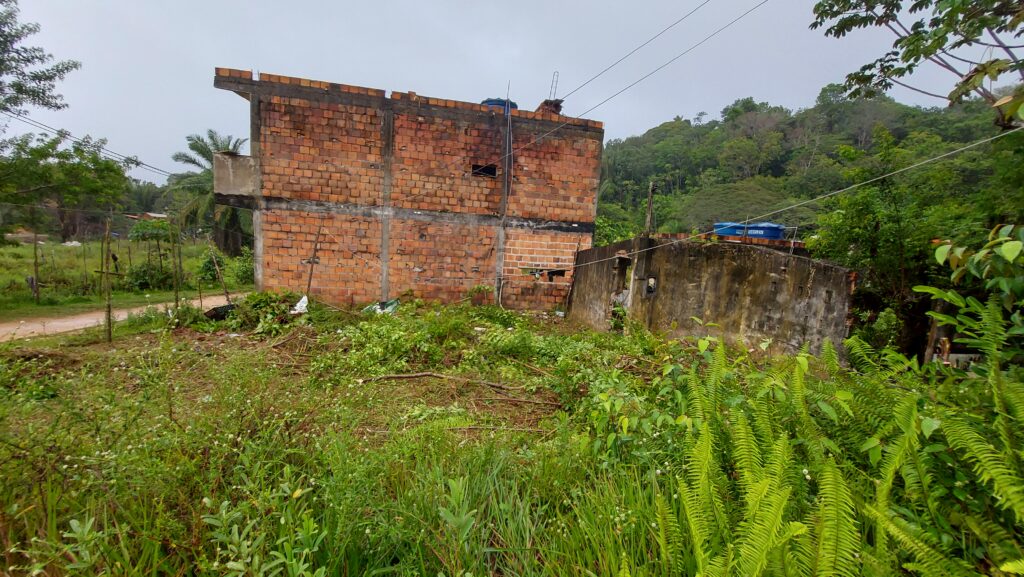
By the end of November, we along with our small team of local builders, had:
- Found and bought a more suitable plot of land (without a stream running through it, and a bit flatter)
- Cleared the vegetation
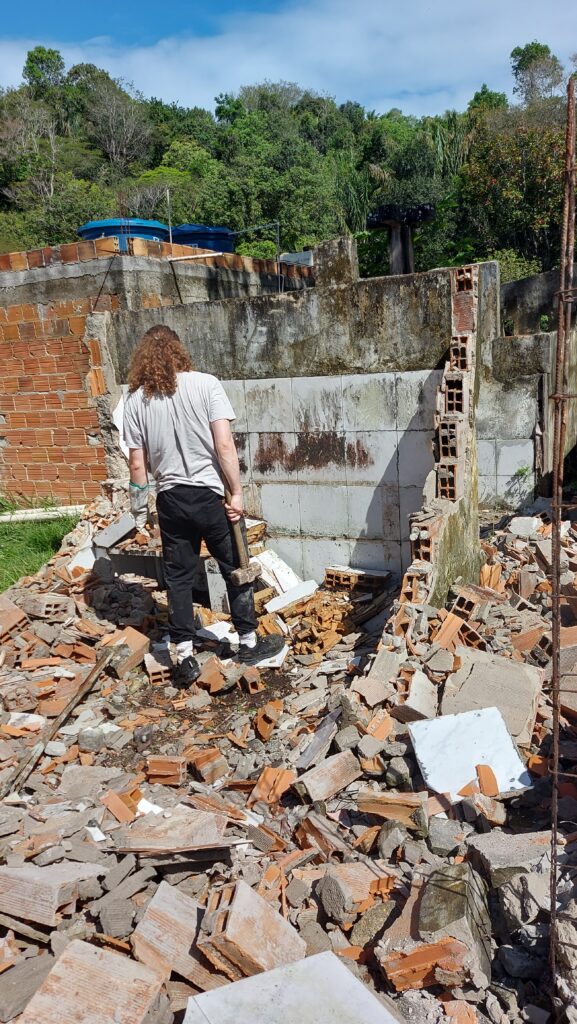
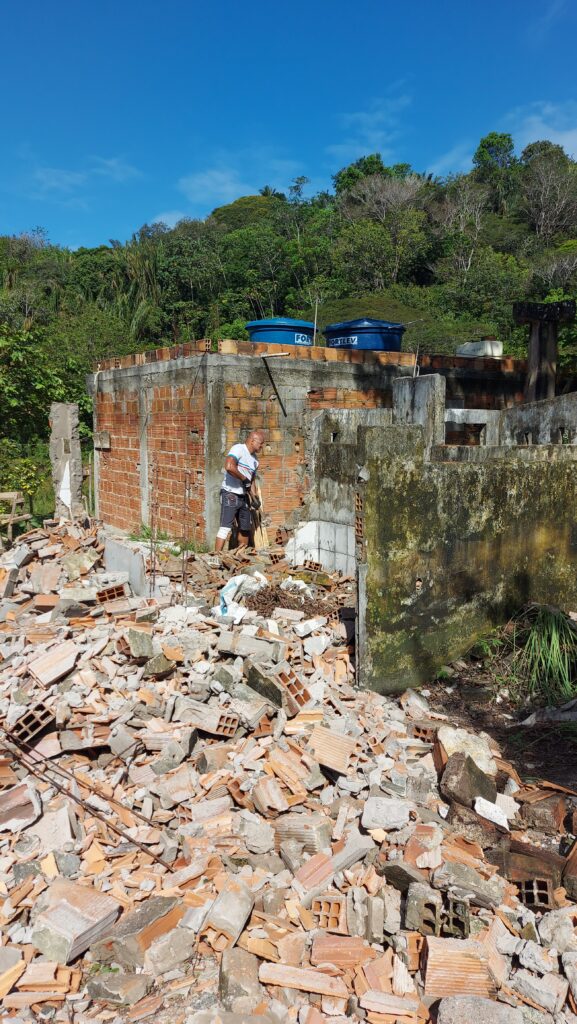
- Manually demolished the existing building using sledge hammers
- Had the large tree cut down
- Had an electricity supply connected
- The builders had finished digging a series of 9 holes (around 2m deep) and preparing the iron reinforcements for the foundation for the community hall at the front
- Tested around 5 sand samples to find the right ratio of clay to sand for making the eco-bricks for the walls
- Held various meetings with the Architect and Engineer – the ground floor plan was approved and the 1st floor was very close to approval
- The builders had built a temporary shelter for the brick machines and production line, very close to the site, with an electricity supply
- Installed cameras on both sites to monitor and communicate when offsite
Demolition of the existing building
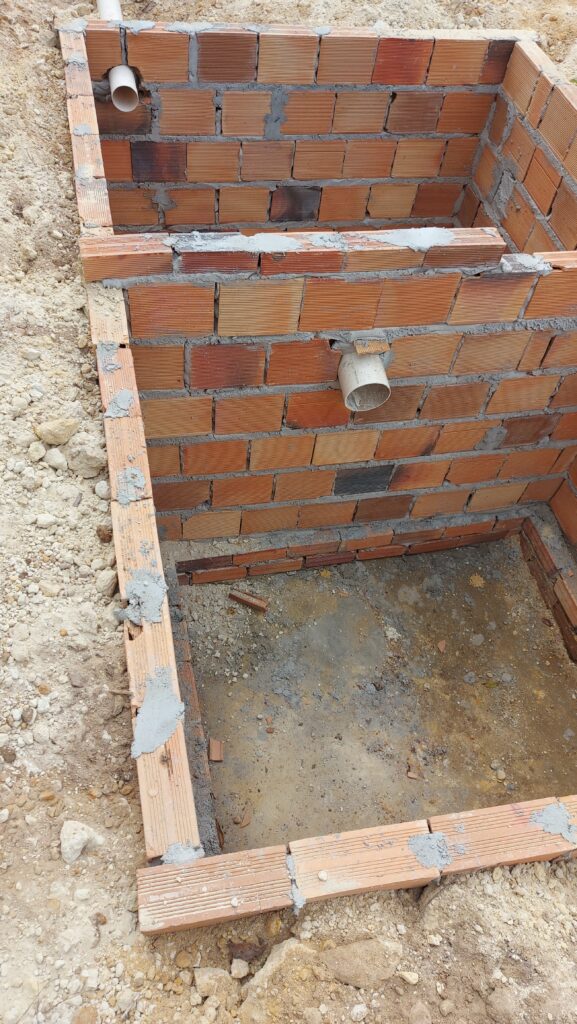
By the end of December, the remaining foundation holes had been dug at the back and reinforced with iron and concrete. Black bitumen had been painted on to protect against rising damp, the site had been levelled with sand, manually dug from the neighboring plot and moved by wheel-barrow; and the 2 sewers were complete.
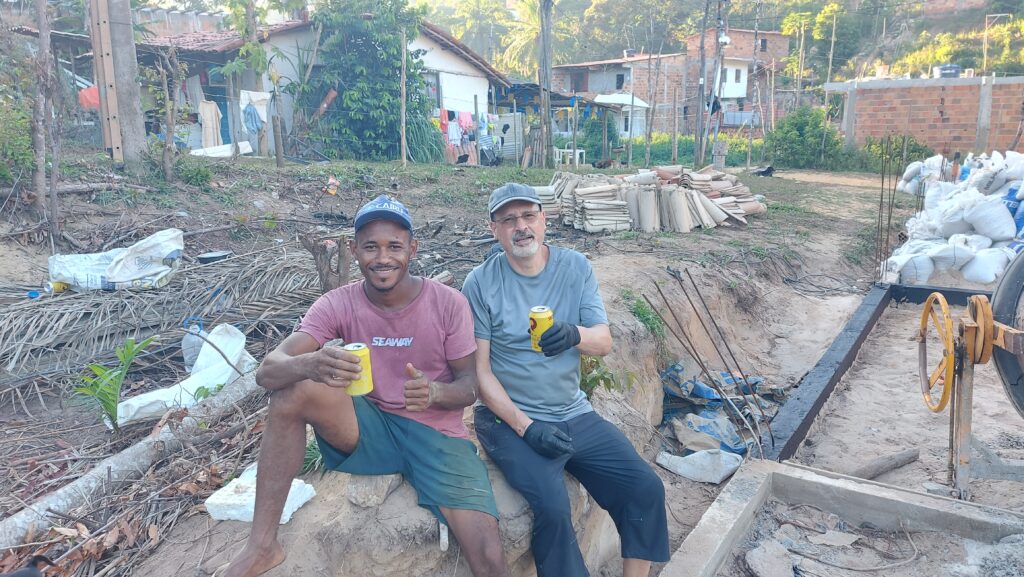
The foundation was officially completed on 2nd January. Meanwhile, eco-brick production continued. As of 11th January, we have around 1000 bricks that we will use to build indoor furniture supports, and around 600 stronger bricks that will be used for the community hall.